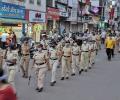
It has taken 51 days to reach a daily caseload of 84,000 from 11,000, as against 85 days taken in the first wave, report Abhishek Waghmare and Sohini Das.

'I don't think anybody would want to be in my position today where every head of State has to be explained that I am prioritising my country because there is a surge in cases.'
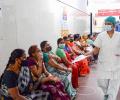
Both manufacturers have sought funds in excess of Rs 150 crore under the department of biotechnology's Mission Covid Suraksha scheme. Announced last November, the scheme has an outlay of Rs 900 crore to help develop Covid vaccines, from the clinical development stage to setting up production sites.

'No approval was given to Sputnik V on Thursday. Some queries have been asked on safety, efficacy, and logistics, which the firm will have answers to at the next meeting'
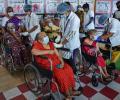
'We expect to get the approval in the next few weeks,' says Deepak Sapra, CEO, API and pharmaceutical services, Dr Reddy's Laboratories (DRL).
'He came back from the US only to work for his country.' 'He has invested his fortunes to build this company and is married to his work.' 'Rarely does one see such commitment.'
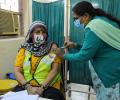
Anybody over 50 years of age or with co-morbidities can get a date, place and time of choice for getting the vaccine shots.
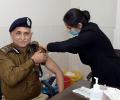
Two weeks after the vaccination programme started, about 37 per cent of the targeted 10 million healthcare professionals had received the first shot. This slow rate may prompt the government to allow vaccines in the private market sooner, to use up the doses before they expire, Sohini Das reports.
Once a difficult market to crack, in recent years, China has relatively opened up its drug market, enacting reforms and speeding up approval time.
Ahmedabad-based Zydus Cadila, Bharat Biotech's intra-nasal candidate are among the candidates who got approval from the expert panel to conduct clinical trials, Sohini Das reports.

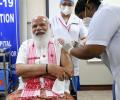
In India, Opposition parties along with healthcare professionals have urged the government, including Prime Minister Narendra Modi and top leaders, to take either of the Covishield or Covaxin doses, which could help in drastically reducing trust and fear issues amongst citizens., reports Sohini Das.
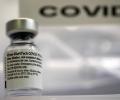
Pfizer sought to participate in the Subject Expert Committee consultations towards an emergency use authorisation for its Covid-19 vaccine. However, the company representatives have been unable to participate in the meetings because of extremely short notices of a few hours or less and time-zone limitations.

Serum Institute already has two deals of 100 million each to supply the Oxford-AstraZeneca and the Novavax vaccine to Gavi-Covax at $3 per dose.
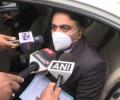
'Safety is my first priority.' 'I need to ensure that any drug or vaccine that our citizens get is first safe.'
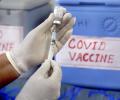
The Covishield maker's forte throughout the past half a century has been a combination of affordable vaccines and high volumes. Its tetanus, diphtheria and measles vaccines are known throughout the world, reports Sohini Das.
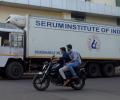
'We are hoping by March, the government allows us to export and give it to the private market.'
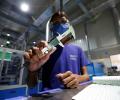
'The government should put the whole road map together for the vaccine and decide how industry can support...' 'They should allow the private sector to vaccinate.'

The expert committee sought more information from Serum Institute regarding the Oxford-AstraZeneca vaccine.
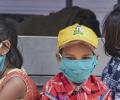
The primary objective was to get the adult vaccine as children rarely have a severe form of the disease. Once schools reopen, the demand for vaccines for children under 12 may soar.

Each of the larger states may need less than Rs 10,000 crore each to finance the exercise.
